
Once you start to go through puberty, it’s possible to get pregnant or get someone pregnant, which is why it’s important to be familiar with how reproduction works and different ways to prevent pregnancy.
Watch: Pregnancy and reproduction explained
Activity: “Journey of pregnancy” - Drag the cards into the correct sequence
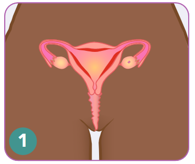
Step 1: Egg preparation
An egg is getting ready to leave the ovary. The lining of the uterus is getting thicker.
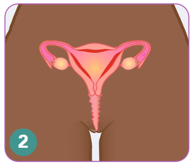
Step 2: Ovulation
The egg leaves the ovary. This is called ovulation. The egg moves down the fallopian tube to the uterus.
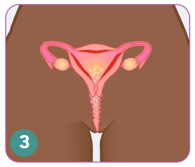
Step 3: Sexual intercourse
When a woman and a man have unprotected vaginal sex, a man’s sperm can go into the woman’s vagina. The sperm goes up into the uterus and fallopian tubes to meet the egg. This can lead to pregnancy.
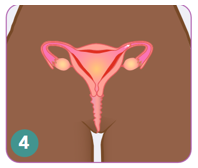
Step 4: Fertilisation
The sperm meets the egg. They join together. This is called fertilisation.
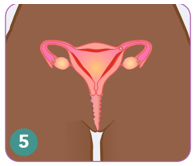
Step 5: Journey to the uterus
The fertilised egg moves through the fallopian tube to the uterus.
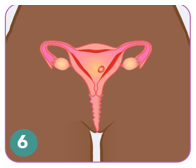
Step 6: Implantation and pregnancy
The fertilised egg sticks to the side of the uterus. A baby can then start to grow.
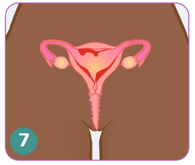
Step 7: If no fertilisation occurs
If there is no sperm to meet the egg, the egg will not be fertilised. The lining of the uterus comes away.
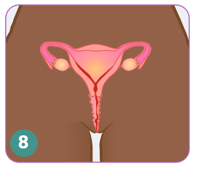
Step 8: Menstruation
Blood and the lining from the uterus flow out through the vagina as a period (menstruation).
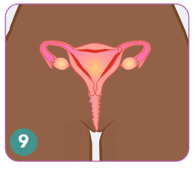
Step 9: New cycle begins
The whole cycle begins again for 28-30 days.